
France tricked evryone for a very long time,it was able to use the teachings of the British to hone it’s skill as being influencial in other coutries/races business and solidified ties and trade. This made the country of France wealthy.
France, now one of the wealthiest and most populous kingdom in Western Europe at the time, experienced significant transformation due to the war.

(The Hundred Years’ War) was an intermittent conflict between England and France from 1337 to 1453. It stemmed from disputes over English territories in France and the English claim to the French throne.
The war strengthened national consciousness and identity, uniting the French against a common enemy. Figures like Joan of Arc inspired French troops and led to key victories, such as the Battle of Orléans, boosting morale and turning the tide against the English. Despite initial English dominance, France ultimately expelled the English, solidifying its sovereignty and laying the foundation for a centralized monarchy.
Cultural circles remained strongly oriented to aristocratic values and the past. With the accession of the house of Valois came a high nobility, distinguished by lavish and exclusive conceits. When John II formed the Order of the Star (1351), an institution imitated by the great lords for their clientages, chivalry stood incorporated as the most distinguished of religious confraternities.

The dream of the Crusade remained strong, notably among princes of the fleur-de-lis, who dominated the public life of Valois France to the point of eclipsing the monarch; beneath them many noble families disappeared, while new ones emerged among the captains, lawyers, and patricians. Jean Froissart spun out chronicles of the war at once detailed and grand, full of the frivolous courtly protocol that marked the aristocratic life of his day. Tapestries created for courtly patrons idealized a life of enticing gardens, tournaments, and the hunt. Paintings as well as tapestries decorated the walls of chambers that were smaller and more elegant than the cavernous halls of earlier centuries.
The delicate Gothic Rayonnant style of the Île-de-France remained in favour through the 14th century, inspiring the chapel built by Charles V at Vincennes, while the decorative arts of furnishings and manuscripts exploited the Gothic tendencies to articulation and grace. The evocation of the Classical past became less fantastic and more heroic in the humanist circles of Pierre Bersuire and Petrarch; their interests helped to attract copyists and artists to the papal court of Avignon. Books of hours (the most popular private devotional works of the later Middle Ages) could become “very rich,” as in the case of a sumptuous manuscript undertaken for Jean, duc de Berry (c. 1410); more typically they were pocket books for general use by the literate, whose numbers continued to increase.
Some leading commercial centres of the 13th century suffered as new trade routes developed in the empire and by sea and as textile manufactures and money markets—the latter suffering from unstable coinages—became more dispersed. The fairs of Champagne declined rapidly after 1310. Only a few capitals, such as Avignon, Bordeaux, and Paris, prospered; and even they were hard-hit by plague. Nor did the French merchant or manufacturer keep up with the new business techniques being developed in Italy and the Low Countries. His work often unspecialized, his bookkeeping old-fashioned, his tastes simple, he typically looked forward to securing his future by the purchase of land.
The French kings of the early 16th century could look back with satisfaction at the virtual expulsion of the English from French soil in the course of the preceding century. This success offered a shining precedent for further military sallies, this time against the growing power of the Habsburgs. In 1445 the first steps had been taken to fashion a royal French army out of the ill-disciplined mercenary bands upon which French kings had traditionally relied. It was a small force—no more than 8,000 men—but it was a beginning.
The role of the nobility in the army was strong, for the art of war was still considered a noble pursuit par excellence.The great peculiarity of the ancien régime was that a system committed to preserving tradition also contained within it powerful forces for change. The absolute monarchy developed between 1624 and 1642 by Richelieu and later by Mazarin, Colbert, Louvois, and Louis XIV was guided by a modern raison d’état, in which the state was eager to further changes of all kinds for its own purposes. Administratively, its absolutist will, formulated at Versailles in a complex array of governmental councils, was enforced in the provinces by the intendants and their subordinates.
The monarchy favoured modern manufacturing and, more desultorily, modern finance. It protected and firmly guided intellectuals through the Académie Française. With greater hesitation, the monarchy also promoted France’s drive to obtain economic and military supremacy not just in Europe but overseas as well, in North America, India, Africa, and the Caribbean.After 1740 industrial production in France rose annually by about 2 percent overall and even more in some sectors. During the later decades of the 18th century, French industrial production grew rapidly, although not on the same scale as in Britain, whose industrial development had begun 60 years before that of the French.
Coal mining was a major industry by 1789, its production nearly 6 percent higher in the 1780s than in the preceding decade. Mining attracted vast amounts of capital, some of it from the aristocracy. In 1789 the Mines d’Anzin near the Belgian border already employed thousands of workers. In textiles, entrepreneurs such as the Swiss Protestant Guillaume-Philippe Oberkampf created new manufactories that permitted better regulation and control of production.
Most production continued to be centred in small artisanal workshops, however, and power-driven machinery remained a rarity.Commerce, especially with the colonies, was an important area of change as well. France’s first colonial empire, essentially located in North America, was a source of great wealth. Even though France lost both Canada and India during the Seven Years’ War (1756–63), the Caribbean sugar islands continued to be the most lucrative source of French colonial activity in the last 100 years of the ancien régime.
The French shared the West Indies with Spain and England: Cuba, Puerto Rico, and the eastern half of Hispaniola belonged to Spain; Jamaica belonged to England; but Guadeloupe, Martinique, and Saint-Domingue (Haiti)—the richest of all nonwhite 18th-century colonies in the world—were French. In Saint-Domingue 30,000 whites stood an uneasy watch over a black slave population that grew to more than 400,000 by 1789. In the islands, the slaves produced sugarcane and coffee, which were refined in France at Nantes, Rochefort, and Bordeaux and often reexported to central and northern Europe.
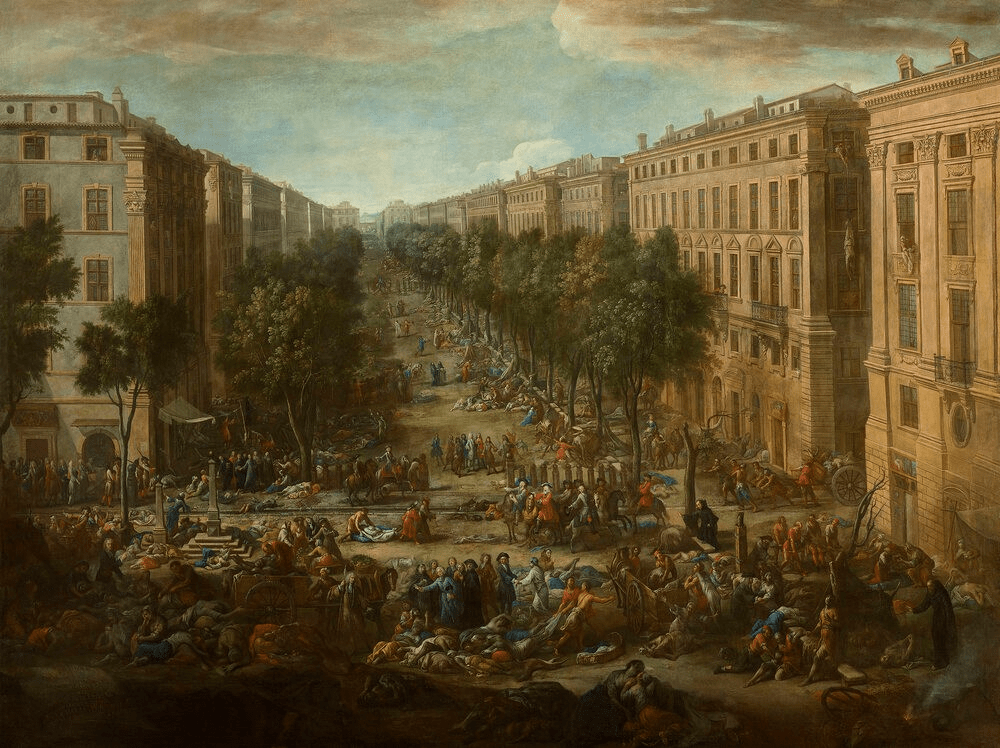
This triangular trade grew 10-fold between 1715 and 1789, and the value of international exports in the 1780s amounted to nearly one-fourth of national income. The sugar trade enriched the planters, the bankers in Paris who had acted as brokers for import and reexport, and the manufacturers of luxury goods that were shipped from France to the Caribbean. Not surprisingly, the French colonial trade was a closely watched process, governed by mercantilist protective tariffs and rules.Commerce rather than industry buoyed up French cities, especially the Atlantic seaports.
In 1789, 15 percent of Frenchmen lived in cities with more than 2,000 inhabitants. Still, Paris, a city of about 600,000 inhabitants, was only half the size of London, the world’s largest seaport. But, regardless of their size, French cities were centres of intellectual transformation. It was there, in the Sociétés de Pensées, Masonic lodges, and some 32 provincial academies, that writers found their public. There also took place the cultural revolution that inspired the writers in turn and the economic changes that gave momentum to the cultural upheaval.
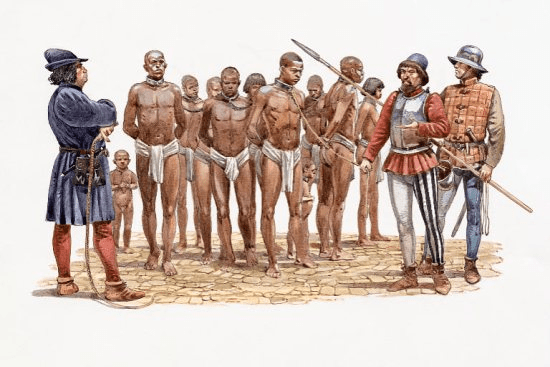
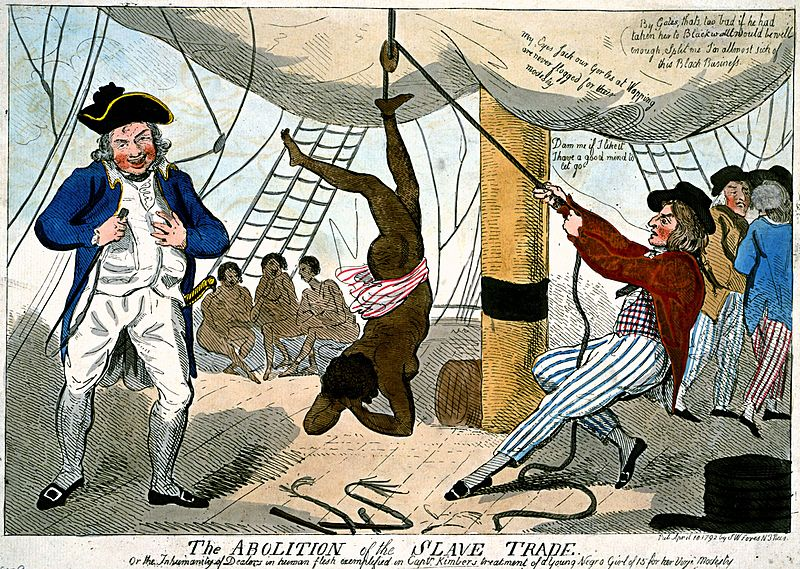
France was relying on trade and the slave trade to keep it’s pockets fat. The French colonial empire practiced slavery in its colonies. Slavery was essential to cheaply extract raw materials and scale large agricultural cultivation. In the mid-16th century, enslaved people were trafficked from Africa to the Caribbean by European mercantilists. Nor were New France, Louisiana, or French African colonies immune.
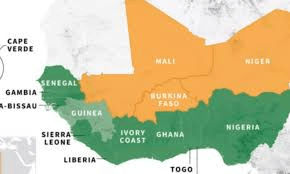
The French West India Company developed tobacco plantations in French colonies. The company had a monopoly on the slave trade from Senegal, which since 1658, belonged to the Company of Cape Verde and Senegal. The slave trade continued under the operation of the Compagnie du Sénégal from 1658 to 1709. The company traded slaves with the Hausa Kingdoms, Mali, and the Moors in Mauritania.
As of 1778, the French were trafficking approximately 13,000 African people as slaves to the French West Indies each year. Slavery was abolished by the revolutionary convention of 1794.Slavery in New France was practiced by some of the Indigenous populations, which enslaved outsiders as captives in warfare, until European colonization that made commercial chattel slavery become common in New France. By 1750, two-thirds of the enslaved peoples in New France were Indigenous, and by 1834, most enslaved people were African.

The institution, which endured for almost two centuries, affected thousands of men, women, and children descended from Indigenous and African peoples. It also impacted many Indigenous people, who were used as domestic servants and traded as goods.African slaves in New France were a minority in relation to both African slaves within New France and throughout all “New World” slave holdings.
Out of the roughly 3.8 million slaves who had been transported from Western Africa to the Americas by the 1750s, only about 1,400 ended up in New France. Similarly, African slaves were continuously outnumbered by the enslaved indigenous population that formed the majority of the forced-labor force in New France. While exact figures are hard to reconstruct, an estimate of slave populations in 1759, on the eve of Conquest of 1760 suggests a total of around 4,000 slaves, of which around 1,200 were African.
It was in 1632 that the first recorded black slave, Olivier Le Jeune, arrived in New France. It would take more than 50 years later for the next black slave to appear in records, despite strong efforts to augment the numbers of black slaves. Several attempts were made throughout the history of New France to increase the number of African slaves brought to the colony to increase the available workforce.
Attempts to increase the economic output of mines, fisheries, and farms were frustrated by the lack of workers. There was much concern that the introduction of African enslavement in Canada would be a costly economic option, citing the major differences in climate as the main reason for its possible failure. Nevertheless, the Governor, Marquis de Denonville, petitioned Louis XIV in 1688 for permission to import African slaves into New France to help establish a colonial economy more closely based on that of France’s Caribbean colonies.
In May 1689, permission was granted by the King to begin the import of black slaves. However, the number of African slaves remained quite low; colonial records show that there were only eleven African slaves in New France between 1689 and 1709. Later calls to increase the importation of African Slaves to New France also echoed the example of other European colonies that relied on slave labor. For example Michel Begon argued in 1716 that New France should try to emulate the Thirteen Colonies in their use of slaves.
However, attempts at modeling New France on other colonies were frustrated both by historical accidents and changing colonial policy. While Louis XIV’s authorization of slave imports to New France in response to Denonville’s request was granted, the start of the Nine Years’ War prevented the establishment of continual trade. A similar authorization in 1701 was curtailed by the outbreak of the Seven Years’ War. Beyond the difficulties of establishing slave trading networks in New France, economic factors further hindered their development; New France had less potential for high-profit plantation agriculture compared to other colonies, and the availability of indigenous slaves generally meant that there were fewer profitable opportunities for selling slaves in New France.
The Code noir (French pronunciation: [kɔd nwaʁ], Black code) was a decree passed by King Louis XIV of France in 1685 defining the conditions of slavery in the Antilles then also Louisiana and served as the code for slavery conduct in the French colonies up until 1789 the year marking the beginning of the French Revolution. The decree restricted the activities of free people of color, mandated conversion to Catholicism for all enslaved people throughout the empire, defined the punishments meted out to them, and ordered the expulsion of all Jews from France’s colonies. The code has been described by historian of modern France Tyler Stovall as “one of the most extensive official documents on race, slavery, and freedom ever drawn up in Europe”.The Law of 20 May 1802 was a decree passed by First Consul Napoleon of the French First Republic on 20 May 1802 that reinstated slavery. It decreed the reinstatement and continuation of slavery in French colonies reversing the Law of 4 February 1794, which had abolished the institution in all of France’s overseas possessions but was only implemented in Saint-Domingue, Guadeloupe and Cayenne.
French colonial authorities in Isle de France and Réunion refused to abolish slavery due to opposition from local colonists, while Martinique refused to ratify it due to a royalist insurrection in the colony which began on 16 September 1793 and resulted in Martinican planter Louis-François Dubuc signing the Whitehall Accord with Great Britain in 1794. On 5 February 1794, the British began an invasion of Martinique and established full control over the island by 24 March, and thus the colony, like British-occupied Tobago and Saint Lucia, remained unaffected by the 1794 decree.
The Law of 20 May 1802 explicitly concerned the colonies which had not implemented the Law of 4 February 1794: it was linked to the Treaty of Amiens of 26 March 1802, which returned Martinique, Tobago and Saint Lucia to France. Consequently, it did not apply to Saint-Domingue, Guadeloupe or French Guiana. The reestablishment of slavery in Guadeloupe was formalized by another legislative measure, a consular decree passed on 16 July 1802. The decree discreetly charged Denis Decrès, then Minister of the Navy and the Colonies, with restoring slavery in Guadeloupe. However, the French did not officially reestablish slavery in the colony until 14 May 1803.
In Cayenne, slavery was restored by a consular decree on 7 December 1802, followed by a local decree by Victor Hugues of 24 April 1803 which officially reestablished slavery.The Law of 20 May 1802 had no effect in Saint-Domingue where slavery had been abolished by the 1793 Sonthonax and Polverel proclamation [fr].
Napoleon‘s attempts to restore French control and slavery in Saint-Domingue proved futile.This law united opposition to Napoleon’s brother-in-law, General Charles Leclerc (commander of the Saint-Domingue expedition), who failed in his attempts to restore French control and slavery in Saint-Domingue.
The Fact that France “rose on the backs of the enslaved” is a historical Fact asserting that the country’s economic development, particularly during the 17th and 18th centuries, was fueled significantly by the immense wealth extracted from its colonial system built on the labor of enslaved Africans.
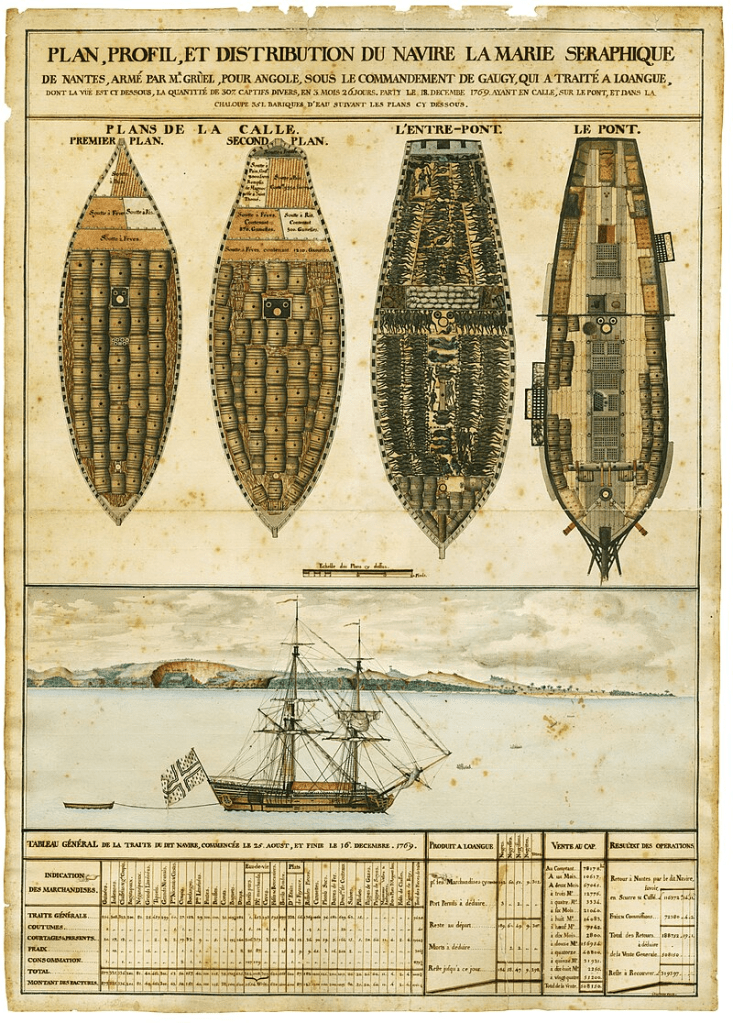
Key historical facts and evidence supporting this argument include:
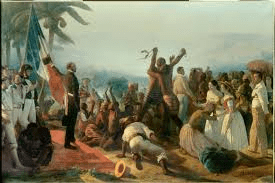
Legacies and reparations: The vast wealth accumulated from this exploitation has been shown to have benefited some of France’s most influential families and contributed to the development of major French ports and financial institutions. After the Haitian Revolution, France demanded that Haiti pay a crippling indemnity to compensate French enslavers for their “lost property,” an act that burdened the nation’s economy for over a century. In 2001, France officially recognized the Atlantic slave trade and slavery as a crime against humanity
The Atlantic slave trade: France was a major participant in the transatlantic slave trade, transporting over one million enslaved Africans to its colonies in the Americas between the 1620s and 1840s. French ports like Nantes, Bordeaux, La Rochelle, and Le Havre thrived from the commerce created by this system.
The plantation economy: The profits from this trade were generated by a brutal plantation system in the French colonies, especially in the Caribbean. Saint-Domingue (modern-day Haiti) became the most profitable colony in the world in the 18th century by using the forced labor of roughly half a million enslaved people to produce sugar and coffee. Other colonies like Guadeloupe and Martinique also relied on massive enslaved populations.
Economic contribution to France: The wealth generated in these colonies was fundamental to France’s economic growth.It satisfied European demand for luxury goods like sugar, coffee, and tobacco.

It provided raw materials for French industries and created fortunes for merchants and planters.Trade with the colonies grew faster than other sectors of France’s foreign trade in the decades before the French revolution.
Codification of slavery: The system was legally enforced by the Code Noir (“Black Code”), a 17th-century decree that defined the brutal conditions of slavery in French colonies, solidifying the dehumanization and exploitation of enslaved people for economic gain.

France has been a nation of falsehoods concerning thr colonies it enslaved, it assertion that these nations needed them is pure BS and it only solidified the actions of a failed state/country that needed these crimes or criminal industries to further it’s fake persona to the world.

The proof of this is the collapse of it’s economies at the hands of their meddling in the African continents business and making it’s former colonially enslaved subjects pay to stay in subjigation under french rule while France benefits from the labor and profits of the people of Africa.

The Alliance of Sahel States have cut off all ties to France and kicked out it’s occupying forces from thier lands,no government influence or officials are in theses countries governments. This is a disaster for France, it has relied on the underhanded deals and ripe off style of it’s government to the point of bliss and never envisioned this ever coming to an end. Well….i’m here to tell you that that dream has become a nightmare and France is in deep doodoo!

It’s now begging these once subjigated African countries to allow them to come back and resume the overseer position they had for 70 to 80 years because they can’t survive without them. The few countries that have rebelled have not allowed this to happen but France has a few countries left that it still has under it’s spell but that is growing smaller by the day! SG64

 Greatest story never told!
Leave a comment